A garden is meant to be the place you go to switch off. For lots of us, it looks more like a to-do list in green: grass to cut, hedges to tame, borders to weed and a shed door hanging open on a pile of half-used tools.
When school runs, work and dinners already fill the week, the garden becomes one more job nobody ever finishes. A calmer garden shrinks that list, so the space gives you rest instead of taking it.
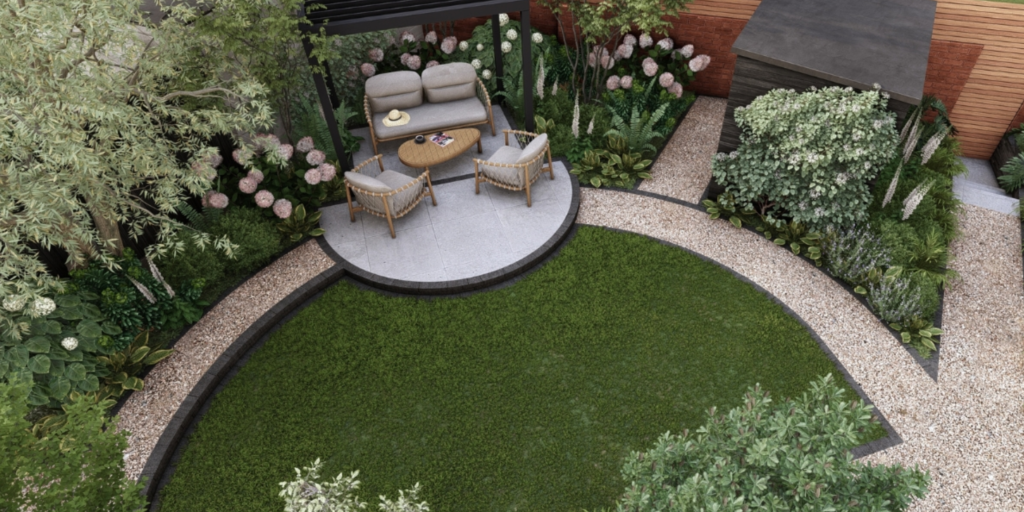
Table of Contents
Why The Garden Adds To Family Stress
Garden stress rarely arrives all at once. It builds slowly, through jobs that keep repeating and mess that’s always on show.
The Jobs That Keep Coming Back
Mowing is the perfect example. Grass can keep growing through mild weather, so the job comes round every week or two during the growing season. Each cut just starts the clock for the next one.
Weeding, watering, hedge trimming and clearing leaves all follow the same rhythm. Each one is manageable on its own, but together they swallow hours of your weekend and a steady chunk of headspace. Garden work definitely belongs on the list of chores we hate, because it never ends and rarely earns a thank you.
The View From The Kitchen Window
A garden is always on show. Whoever’s at the sink sees the ragged edge, the patch of dock leaves and the scooter abandoned on the lawn. Every glance feels like another small job, so the list gets read again each time someone puts the kettle on.

Weekends can make it worse. A free Saturday starts to feel like it belongs to the garden, and the family plans you’d made slip further down the list.
What A Calmer Garden Looks Like
A calmer garden asks for fewer decisions and leaves you more time to enjoy it.
Fewer Jobs, Fewer Decisions
Start by cutting down what needs looking after. Hardy perennials come back every year and ask for very little. A layer of bark or gravel across the borders keeps the weeds down.
A few large pots by the back door can hold herbs and favourite plants, close enough to water while the pasta boils. The shape of the lawn matters too, because simple curves are far quicker to cut than a lawn dotted with beds and awkward corners.
There’s no shortage of ideas for a garden refresh, and StressedMum’s guide to taking your garden to the next level is a lovely place to start. Just weigh up how much upkeep each idea adds, not only how it looks.
A Spot That’s Just For Sitting
There’s research behind the stress-relieving potential of gardening. In one field experiment, 30 allotment gardeners were given a stressful task and then spent half an hour either gardening or reading indoors.
Their levels of cortisol, a stress hormone, dropped in both groups but fell further for the gardeners. The gardeners’ good mood also came back in full, while the readers’ mood dipped even lower.
A much larger UK study points the same way. Researchers surveyed nearly 20,000 adults in England. People who spent between 120 and 179 minutes a week in nature had 59% higher odds of reporting good health and 23% higher odds of reporting high wellbeing than people who spent no time in nature at all.
It didn’t matter whether those two hours came in one long visit or several short ones. The study looked at places such as parks, woodland and beaches, excluding home gardens. It found an association, not proof of cause and effect, so it doesn’t establish a two-hour target for time in your own garden.
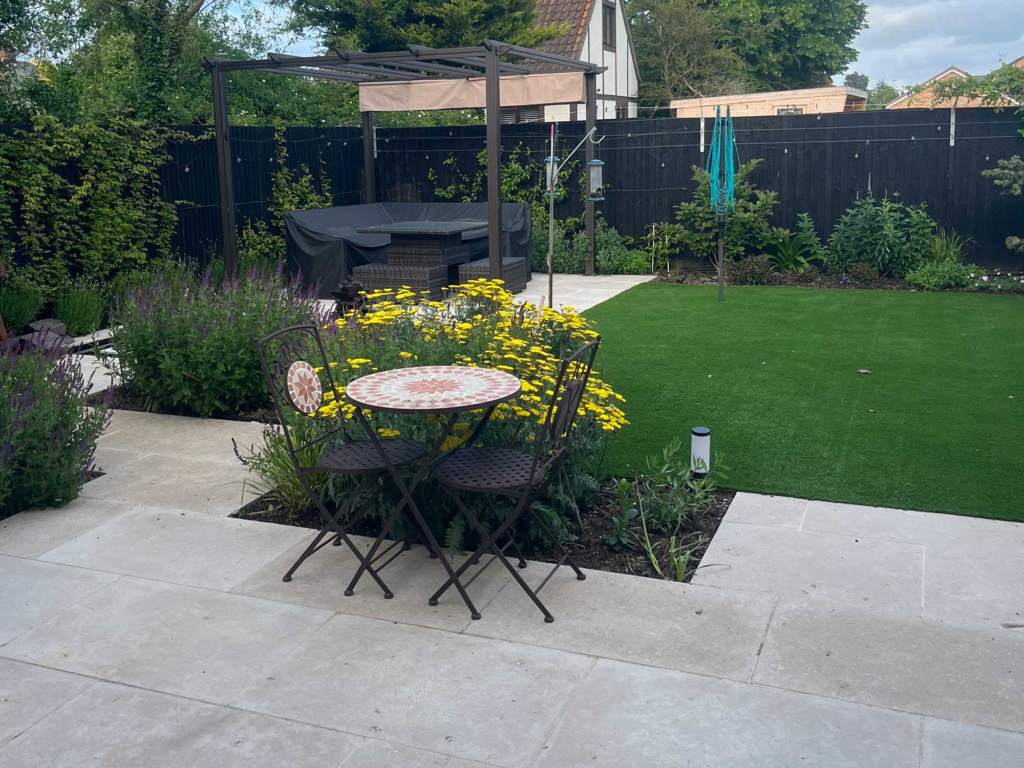
A bench or a couple of chairs in a sheltered corner turn the garden into somewhere to sit, not just something to sort out. Ten minutes there with a cuppa after school can be a welcome pause. Face the seat towards your favourite plants and away from the washing line.
Handing Over The Jobs That Repeat
Some garden jobs run on a fixed schedule, and those are ideal for handing over to a machine.
Letting A Robot Mower Take The Lawn
For most families, the lawn is the biggest repeat job in the garden, so it’s where you’ll save the most time. Segway Navimow mowers work without a boundary wire, so there’s no cable to bury around the edge of the lawn. You map the lawn once in the app, set a schedule, and the mower gets on with it.

The i2 LiDAR range uses LiDAR navigation, with models recommended for lawns from 800 m² up to 2,000 m². It runs at 59 dB(A), roughly the volume of a normal conversation, so you can carry on chatting on the patio while it works.
The real win is time. One weekly job comes off the family rota, and Saturday morning goes back to the park, a football match or a well-earned lie-in.
Jobs Worth Scheduling Or Batching
The rest of the garden jobs just need a little planning. A timer on the outside tap keeps pots watered through dry spells. A regular 20-minute slot can help you tackle leaf clearing and a quick weed, with hedge trimming planned separately when needed.
Children can take charge of the leaves. Hand them a bucket, give them ten minutes and offer a prize for the biggest leaf. The grown-ups share the rake and the shears, and the job’s done before the kettle’s gone cold.
A Simple Routine For Autumn And Beyond
October is a natural time to get the garden ready for the colder months.
Fifteen Minutes And A Plan
Autumn lawn care comes down to three jobs. First, rake up fallen leaves, because left on the lawn, they smother the grass and block out light and moisture. Second, keep mowing as needed while the grass is growing, aiming for about 4 cm on an ordinary lawn in autumn. Avoid mowing when the ground is waterlogged or the grass is wet or frosty.
Third, tidy the edges. Gardening experts suggest re-cutting the lawn edge and leaving a 7.5 cm gap between lawn and border, so the grass doesn’t creep into your plants.
Start with a fifteen-minute session and tackle one area at a time; bigger gardens may need longer. Small, regular habits tend to outlast the odd marathon tidy-up, which fits nicely with StressedMum’s steps for building a less stressful home.
Making The Garden Work For Your Family
A family-friendly robot lawn mower can reduce the time you spend mowing, although occasional edge trimming and mower maintenance are still needed. It keeps going through the milder autumn days on its own schedule, so the grass stays neat without anyone dragging the mower out of the shed. As growth slows, raise the cutting height and reduce mowing frequency to suit conditions. Schedule mowing when children and pets are off the lawn, following the model’s safety instructions.
You don’t need to overhaul the whole garden to feel the difference. Start with whichever job eats up the most time, then make one small change each season. Bit by bit, the garden stops being another chore and becomes the place your family wants to be.