

The Montessori school is known for being strict, exacting, and prescriptive. However, the philosophy behind the method also involves engaging children in activities that they enjoy and encouraging them to follow through.
There is a statement that is considered one of the cornerstones of Montessori guiding philosophy: “Follow the Child.” What this refers to is the notion that adults (parents, educators, etc). Should allow children to follow their natural instincts in the learning process. Yes, it is also the case that Montessori philosophy is exacting in its methods. The larger idea is that educators should prepare the methods for children. Then let the children follow through on their own.
In fact, there are eight guiding principles that govern the Montessori method overall. Several of which are instructive to the idea of child engagement. As with most concepts included in the Montessori school, these are not just general ideas. They include specific explanations and guidelines for implementation.
There are, of course, distinct benefits to all of the governing Montessori principles. In this article, we will focus on three of them in particular. These should be kept in mind when planning activities for your children in order to enable learning that is both engaging and beneficial.
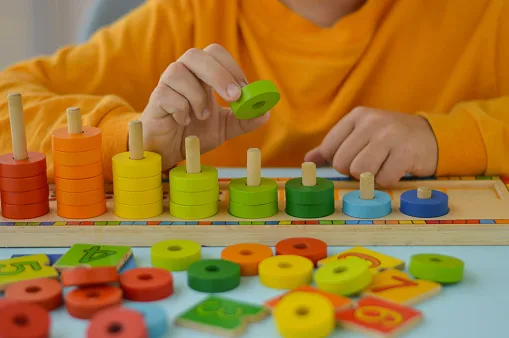
Table of Contents
Principle of Choice
The principle of choice is one of the primary ideas utilised in the Montessori classroom. The principle of choice means that children should be allowed to choose their tasks as they please. It does not mean that they should be permitted to do absolutely anything they want. If they walk into the classroom and start hitting other children, of course it will be frowned upon. But if children gravitate towards some particular activities more than others. Educators should allow them to follow their natural tendencies, as these tendencies are an indication of natural strengths and interests.
If children’s strengths are capitalised upon and further strengthened through repeated activity. The idea says, there will be greater growth as a result. So it could be that a particular child is more interested in building blocks than animal classification cards. They should be allowed to choose that task freely.
If a child doesn’t indicate any particular interest in any of the available activities. Educators will step in to provide guidance. But the principle states that this should only happen when necessary.
Intrinsic Motivation
The principle of intrinsic motivation is similar to that of the principle of choice. It states that children should be self-motivated to complete tasks, rather than being motivated by artificially constructed external rewards. In the classroom, this means the absence of prizes and even grades.
The reason these types of external rewards are deemphasised. Is because they are considered to distract children from the natural pleasure. That they would otherwise get out of performing tasks that they like. If a class full of children are all racing to finish something first or best, then the focus will be more on the reward than on the task itself, the theory says. Ultimately, the task and whatever benefits it had to offer will be forgotten because it wasn’t the focus to begin with. So let the children each take a puzzle, but don’t make it into a race for who can finish first.
Learning in context
The Montessori school is a big proponent of learning in context. Rather than simply giving tasks for children to complete, an effort is made to ensure the proper context is provided. This gives children a sense of control and ownership over their activities, and keeps them engaged because they feel they are performing real-world tasks.
We’ve all seen how children like to act out real-life scenarios with dolls, animals, etc. The Montessori school believes that the closer the classroom environment is to the real world, the more interesting (and productive!) it will be for the children.
Learning in and outside the classroom
Parents too can utilise these principles at home. To whatever extent possible, parents can present scenarios where children can engage in household tasks (helping with cooking preparation, arranging items at home, helping in the garden) sequentially and in such a way that their children both learn from and enjoy the process.
Beyond this, there are many toys and games available now that are built upon Montessori ideas and can be both fun and educational for children to use at home. Specially created objects that give children a refined sense of color, shape, sequence, etc can all be used outside the classroom for additional benefit. https://www.tickit.eu/ offers a wide range of options for different age ranges that are sure to keep your children occupied, engaged, and continuously learning.
Let your children explore…
Kids are natural learners. Rather than being forced into an overly achievement-oriented environment, the Montessori school believes that simple guidelines should suffice to allow children to flourish in their natural state. As a society we seem to have lost touch with this idea, but going back to the basics should help to remind us of it and pass it along to our children.
Learning doesn’t have to be tough, especially at a young age. If the Montessori principles of choice, intrinsic motivation, and learning in context are followed, a whole world of exciting and educational activities will open up that will allow young children to blossom during these critical formative years.





love this brand – fueling young minds to the max – recommended to all
I totally agree
I always thought I knew what a Montessori school is but I just realised it’s so much more than hands on activities. I truly believe that we should encourage development and skills set in what our child enjoys to do and not force them to follow our dreams.
There are some very interesting ideas. I think there are far too many targets that teachers have to assess, particularly at primary school.
Great read – I have always been really interested in this – love these principles!